
International Women Day: Florence Attridge

By Rachel Webber.
As we celebrate International Women’s Day, we look to celebrate women past and present who have shaped not only our lives but that of our communities. Chelmsford has seen its fair share of influential women but today we focus on a woman who played an integral part in the Second World War. Of course, we hear of the famous women during the war such as Essex’s own Dame Vera Lynn, the Queen Mother and Clemintine Churchill. But what really interests me are learning the stories of the everyday women. The women who picked up the mantle of working in the factories and fields while remaining the primary caregivers in society. The outbreak of the Second World War in 1939 saw a major shift in gender roles. Millions of women left behind their lives of domesticity to work in the factories, fields and even the battlefields. By 1943 over 5 million women were in work with the biggest employer being in metal and chemical industries with 1.9 million women. Today I shall be shining a light on one of these workers. Florence Attridge (pictured below on the front page of the Essex Chronicle), whose time at Marconi Works led her to be rewarded a British Empire Medal. This is her story.
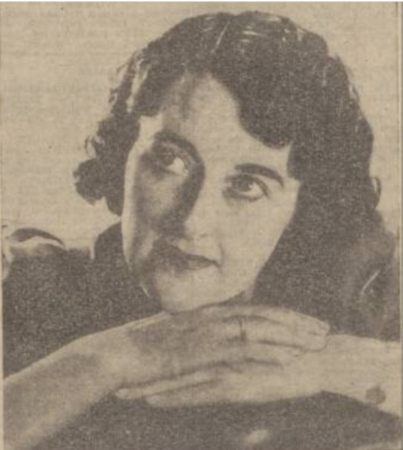
Born on 14 June 1901 in Chelmsford to Henry and Martha Attridge, Florence lived at 60 Moulsham Street (now Frost hairdressers) and was one of five children. After leaving school aged just 12, she followed in her father’s footsteps and began working at Marconi Company just after the First World War. This story would have been repeated all over Chelmsford with Marconi becoming the largest employer in the area. The outbreak of the Second World War in 1939 saw Florence’s life change forever. The war had seen a huge demand for wireless radios and Chelmsford became the epicentre of radio and communication production.
Marconi was inspired by the factories of Henry Ford in Detroit USA, who created the assembly line technique of mass production. Meaning the raw materials were brought in and complete wireless sets were produced in the same place, along with the components in dedicated areas of the factory. Florence was an important cog in this production line and became head of the Marconi New Street Coil Winding Shop. This was an ultra-secret area of the factory in which only authorised personnel were admitted to work. The key part of the wireless set is its coils, transformers, inductors, filters and chockes. The construction of these radio’s required wire of various sizes to be wound around frames (see picture 1 below). It was painstaking and intricate work with the need of a steady hand to wind the coils. Only a select number of women were deemed to possess these skills. Florence and her team worked 12-hour shifts both day and night throughout the war in a top-secret part of the factory. It must have been a high pressured and quite isolating experience for Florence who still unbelievably would have been paid less than a male equivalent. She would have been a manager, mentor and friend to these young women spending hours together.
So why was Florence’s work so vital to the war effort? The answer is the radio created by the factory - the British Type Mk II or more commonly known as the B2 radio (see picture 2 below). This radio was issued to SOEs (Special Operations Executives), resistance groups and special forces. The fact that it was lightweight and could easily be disguised as a briefcase made the B2 a must have for spies. Think of James Bond visiting Q’s workshop in MI5. Weighing just over 8 lbs - the weight of a newborn baby - the user can communicate to the allies deep in occupied territory. Over 400 B2 sets were created at Marconi Works in Chelmsford throughout the war.
Picture 1: Coil winding workshop at Marconi Works, New Street during the First World War

Picture 2: a British Type Mark 3 Type II or more commonly know as the B2 Radio.


On top of the high-pressure work Florence had to deal with there was also the ongoing threat of becoming a victim of bombing raids. Three bombs hit the Marconi works on a night in May 1941 when seventeen night-shift workers tragically died. The factory’s importance is shown at the museum in our Bright Sparks Gallery. After the war a model of Chelmsford was found in Germany outlining the factories of Hoffmans, Marconi and Crompton. The Luftwaffe (German Air Force) would have used this model to plan attacks and disrupt industrial production and morale.
In 1946 Florence was awarded the British Empire Medal (Civil Division) for her contribution to the war effort. Sent by post she received her medal alongside a handwritten letter from Buckingham Palace by King George VI. She received a multitude of letters and telegrams of praise from the Admirals and Captain Superintendents, with a signed letter from K3 Section who were from the Naval Intelligence code breaking section. They were an integral part of winning the war in 1945. Florence also received a front page spread in Essex Chronicle and a long service certificate from her manager at Marconi Works. You can see these items in our 20th Century gallery.
Florence married John William Hayes after the war and continued to live in Chelmsford until her death in 1975. A blue plaque was installed by Chelmsford City Council at her home at 14 Andrews Place. On this International Women’s Day we thank Florence and the millions of women around the world who worked their way up to achieve incredible feats at times of great uncertainty and changed the world that we live in today.